Featured Local Provider
Asheville Waterproofing Company
Asheville and surrounding Western North Carolina
Home Problems Guide selected Asheville Waterproofing Company as a useful first contact for this guide after reviewing current public evidence of exact-service capability and local market fit. Featured status is editorial, not a guarantee of project fit.
Understand the Problem
What basement waterproofing and leak problems look like in Buncombe County
Homeowners searching for basement waterproofing in Asheville or leaking basement repair in Buncombe County—including Black Mountain, Weaverville, Candler, Fairview, Leicester, Swannanoa, Woodfin, Arden, and Fletcher—often see water on the floor after rain, damp or stained walls, efflorescence, musty odor, mold on lower walls, or seepage at the floor–wall joint.
This page does not diagnose the leak path. Condensation, plumbing leaks, window wells, and exterior drainage failure can look similar. Site evaluation is required.
Buncombe County / Asheville Rules & Repair Options
High-level solution types
Providers may discuss exterior drainage and grading, interior drain tile and sump systems, wall membranes or sealers as part of a larger plan, crack injection, window-well drains, or combinations. Exterior clay soils and hydrostatic pressure drive many Asheville-area basements toward drainage-based systems rather than coatings alone.
| Project path | When it may be discussed |
|---|---|
| Exterior grading and downspouts | Roof and surface water can be moved away from the foundation. |
| Interior drainage + sump | Water enters at the cove or floor and needs controlled collection and discharge. |
| Exterior waterproofing excavation | Wall membranes and exterior drains are feasible and address the outside face of the wall. |
| Crack injection / targeted repairs | Limited structural cracks leak and injection is appropriate after evaluation. |
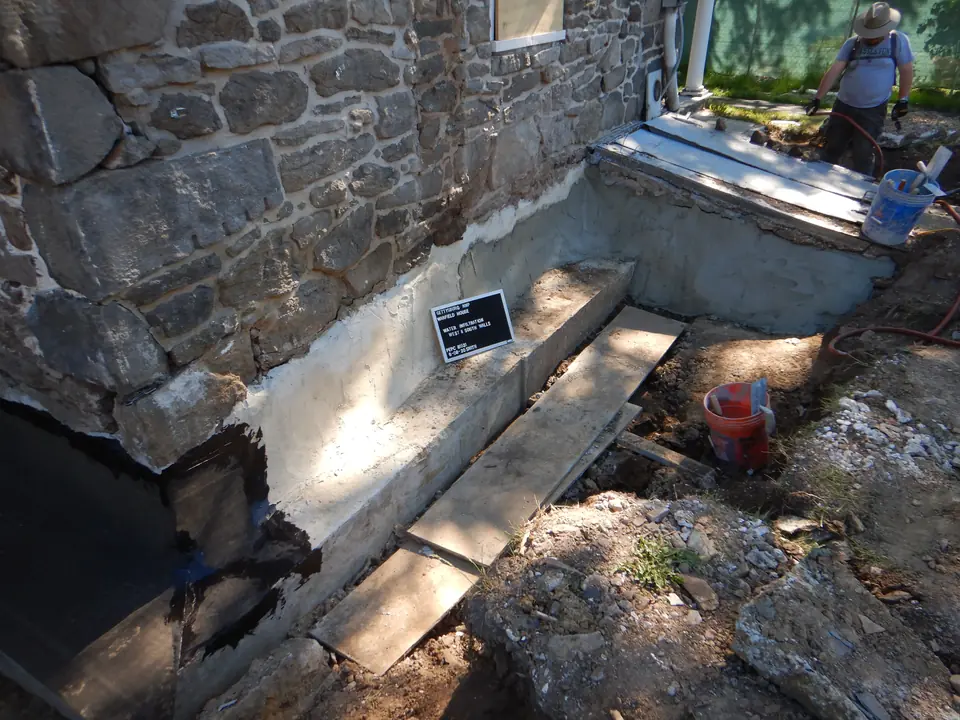
Clay soils, hydrostatic pressure, and Buncombe basements
Western North Carolina mountain soils are predominantly residual soils formed from weathering of gneiss, schist, and granite. Soft saprolite is common at depth. Surface layers are frequently clay-rich. These clays expand when wet and shrink when dry. Common series include Evard, Burton, Tate, Clifton, Cowee, Wayah, Cullasaja, Haywood and related series. Many are mapped as well-drained but become problematic when compacted or when drainage is blocked.
The same soil that looks stable in dry weather generates large hydrostatic and swelling pressure against retaining walls and holds moisture under homes.
Clay soils + steep grades create the pattern of water running toward the house. Surface regrading alone is often insufficient. Subsurface French drains are frequently required. Basement walls against residual clay backfill experience large hydrostatic loads when drainage fails—especially on mountain lots in Asheville and surrounding Buncombe communities.
When waterproofing can trigger permits
North Carolina OSFM still lists the 2018 North Carolina Residential Code as the currently effective residential code. Buncombe County's $40,000-or-less permit exemption has exceptions for load-bearing structural work and for changes to plumbing, electrical, mechanical and similar building systems. The City of Asheville is a separate permitting jurisdiction with comparable permit triggers for structural and trade changes.
How to move forward
1. Record what you can observe
Note when water appears, where it enters, odor, and any exterior grading or downspout issues—without assuming a single system.
2. Connect exterior drainage to interior symptoms
Clay soils and steep grades often drive hydrostatic pressure; exterior water control matters as much as interior fixes.
3. Compare local providers
Use the independent directory to review providers that publicly advertise relevant work, then contact candidates directly for evaluation or estimates.
Cost
Basement waterproofing costs depend on the actual water path and the system used. Current 2026 pricing is more useful when separated into interior drainage, sump equipment, crack work and exterior waterproofing instead of relying on one broad total.
| Planning scope | Current planning range | Context |
|---|---|---|
| Interior waterproofing | $2,000–$6,000 | Common interior drainage, pumping and moisture-management scope. |
| Interior French drain / weeping tile | $60–$120 per linear foot | Useful trade unit when a perimeter drain is actually part of the recommended system. |
| Sump pump | $1,200–$2,500 | Installed planning allowance; electrical/discharge requirements can affect the project. |
| Epoxy crack injection | $800–$1,500 per crack | Targeted leak-control context after the crack and cause are evaluated. |
| Exterior waterproofing | $7,000–$15,000 | Excavation, membranes, drainage and site restoration drive the higher cost. |
| Interior + exterior system | $8,000–$18,000 | Useful broad planning band when a home genuinely needs both approaches. |
Worked interior-drain examples
The following examples multiply the current $60–$120 per-linear-foot interior-drain range. They are not a recommendation that a basement needs a full-perimeter drain.
| Illustrative drain length | Drain only | Drain + one $1,200–$2,500 sump allowance |
|---|---|---|
| 40 linear ft | $2,400–$4,800 | $3,600–$7,300 |
| 60 linear ft | $3,600–$7,200 | $4,800–$9,700 |
| 80 linear ft | $4,800–$9,600 | $6,000–$12,100 |
What moves a Buncombe County waterproofing quote
| Cost driver | Why it matters |
|---|---|
| Interior vs. exterior access | Exterior excavation on steep mountain lots can be substantially more disruptive than interior drainage. |
| Drain length and discharge path | More perimeter footage, concrete removal and longer discharge routing add labor and material. |
| Sump/electrical needs | New pump equipment, backup systems or electrical work can add separate trade scope. |
| Structural or mold damage | Bowed/cracked walls, damaged finishes or remediation are separate from basic water-management pricing. |
Planning evidence reviewed August 16, 2026. Current 2026 Angi and This Old House waterproofing data support the method ranges and worked examples above. These are independent planning figures, not Asheville Waterproofing Company prices. No calculator is shown because the correct system may combine drainage, sump equipment, crack work, grading, exterior excavation or structural repair.
Find & Compare Contractors
Local provider comparison options
Use the Featured Local Provider as one starting point, then compare it with the neutral local and regional options below. Confirm current credentials where applicable, insurance, exact repair scope, permitting responsibility, warranty terms and written pricing before hiring.
’58 Foundations
Public materials cover basement waterproofing and related foundation moisture services.
All-Dry / Basement Systems
Public materials describe basement waterproofing systems and leak-related repairs.
Foundation Solutions
Public materials describe foundation and basement waterproofing-related services.
DryWorx Asheville
Public materials focus on basement waterproofing and dry-basement related work in the Asheville area.
Civil & Home Solutions
Public materials describe residential waterproofing and structural moisture services.
Bros Basement Waterproofing
Public materials focus on basement waterproofing and leak-repair related services.
Mount Valley / Groundworks
Public materials describe basement and foundation waterproofing services in regional markets.
Basement & Radon Solutions
Public materials list basement waterproofing and related residential services.
Asheville Moisture Control
Public materials describe moisture-control services that may include basement-related water issues.
CNT Foundations
Public materials list foundation and basement moisture-related residential services.
Business information can change. Send a factual correction through the contact page. Home Problems Guide does not recommend, endorse, or screen any provider.
Frequently Asked Questions
Does a wet basement after rain always mean I need full waterproofing in Asheville?
Not always. Condensation, plumbing leaks, window wells, and exterior drainage failure can look similar. Evaluation is required before choosing a system.
How do clay soils cause basement leaks in Buncombe County?
Clay-rich residual soils hold water and generate hydrostatic pressure against basement walls when drainage is blocked—especially on mountain lots.
What does basement waterproofing cost in Buncombe County?
Current 2026 planning data puts common professional waterproofing around $2,460–$8,200, interior systems around $2,000–$6,000, exterior waterproofing around $7,000–$15,000, and interior French drains around $60–$120 per linear foot before sump or other add-ons. Actual scope depends on the diagnosed water path and system design.
Is an interior drain system the same as exterior waterproofing?
No. Interior drains and sumps manage water that reaches the interior; exterior systems address the outside face of the wall. Some homes need combinations.
Can coatings alone fix hydrostatic pressure?
Coatings alone often fail when clay soils and water pressure remain. Drainage-based approaches are frequently discussed for recurring seepage.
Does this site diagnose the leak path from a webpage?
No. Home Problems Guide never diagnoses leak sources from a webpage.
How should I use the provider directory?
Use the directory as a starting point for your own comparison. Contact providers directly to confirm current services, credentials, service area, availability, and project fit.
Are listed companies endorsed?
No. Home Problems Guide does not recommend, endorse, rank, or screen any provider.
Helpful official and practical sources
Buncombe County Permits & Inspections
Check current permit triggers for structural and trade work in the County jurisdiction.
Official resource ↗City of Asheville residential permits
Use the City process when the property is inside Asheville's permitting jurisdiction.
Official resource ↗NC OSFM current building codes
Confirm the currently effective North Carolina code editions.
Official resource ↗USDA Web Soil Survey
Explore mapped soil information around the foundation and lot.
Official resource ↗