Featured Local Provider
Bulkhead and Pier Marine Construction
Virginia Beach / Tidewater, Virginia
A local marine-construction option for homeowners comparing timber, vinyl sheet-pile or riprap bulkhead work. For an existing failing wall, ask the company to separate structural bulkhead scope, shoreline treatment, demolition, backfill, permit coordination and any dock or pier work into a written proposal so competing estimates can be compared on the same basis.
Understand the Problem
Start with the shoreline edge, not a remote diagnosis
Warning signs worth documenting
Repair versus replacement depends on more than the visible face
A contractor may need to assess the wall material, piles or posts, tiebacks or anchors, caps, backfill, drainage, shoreline elevation, scour, access and adjacent improvements before recommending a localized repair or full replacement. If only part of a wall remains, the proposal should explain why the retained portion is suitable to stay and how the new work connects to it.
Shoreline stabilization is part of the decision
Virginia's tidal-shoreline policy means a homeowner should not assume a new vertical hard bulkhead is the only permitted answer. Depending on the site, living-shoreline or hybrid elements may be considered alongside structural repair or replacement. That decision belongs in the permit/design process, not in a generic online diagnosis.
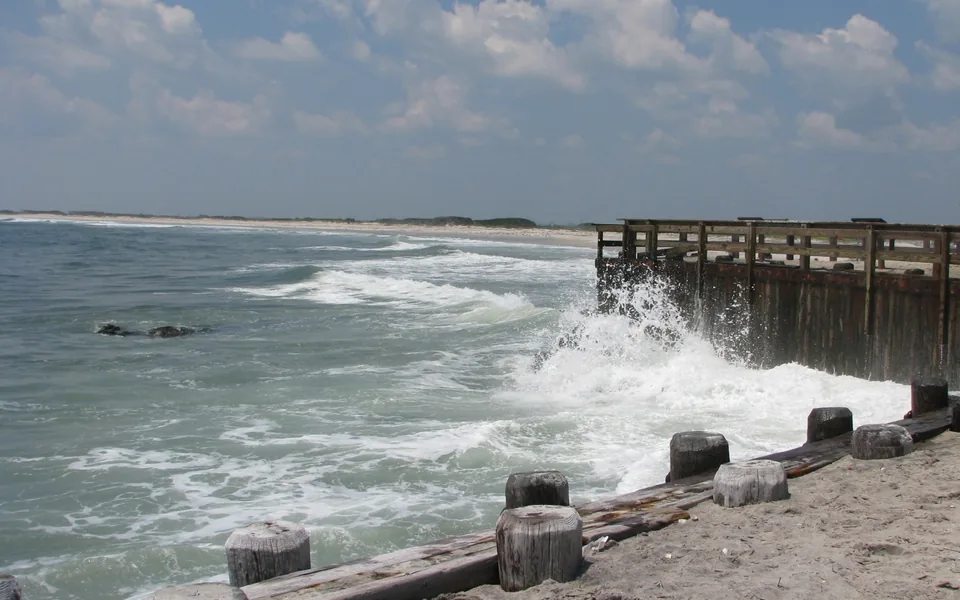
Virginia Beach Rules & Repair Options
Virginia Beach waterfront work has more than one approval layer
The Virginia Beach Wetlands Board currently says an approved Joint Permit Application (JPA) is required to construct, alter or repair bulkheads and similar waterfront structures. The application is submitted through the U.S. Army Corps of Engineers regulatory request system and is distributed for review to relevant state/federal agencies and the City. The City currently lists a $230 nonrefundable processing fee for waterfront construction and dredging applications.
Virginia Beach's residential permit guidance also lists waterfront construction—including bulkheads, piers, boat lifts and riprap—among work that can require permits. Properties in a Chesapeake Bay Preservation Area or Southern Watershed can have additional review requirements. Treat the Wetlands/JPA path and building-permit path as related but distinct checks.
| Potential path | Questions a written scope should answer |
|---|---|
| Localized repair | What failed? What remains? How are tiebacks, panels, caps, backfill and shoreline loss addressed, and will the repaired section connect safely to the existing wall? |
| Structural stabilization | Is the proposal correcting wall movement, voids, scour or backfill loss without replacing the whole wall? What evidence supports that approach? |
| Full bulkhead replacement | What material/system is proposed, how are old components removed, how is new anchorage installed, and what backfill/shoreline restoration is included? |
| Living shoreline / hybrid | Could marsh, planted sill, riprap or other nature-based components satisfy shoreline-protection goals and permit requirements for this property? |
| Bulkhead plus adjacent waterfront work | Are pier, wharf, dock, boat-lift, riprap, stairs, utilities or drainage included? Separate these costs so estimates remain comparable. |
Permit questions to settle before construction starts
- Which agencies and City reviews apply to this parcel and scope?
- Who prepares and submits the current JPA package?
- Does the City require building plans or Virginia-licensed design-professional documents for this project?
- Is the property in a Chesapeake Bay Preservation Area, Southern Watershed or another overlay with additional review?
- Does the proposed solution satisfy current living-shoreline requirements or document why another approach is appropriate?
- Which approvals must be in hand before mobilization, demolition or shoreline disturbance?
Cost
Use broad planning ranges, then compare the complete Virginia Beach scope
Bulkhead and seawall pricing is highly site-specific. Current 2026 national cost guides put many seawall repairs around $100–$250 per linear foot. HomeGuide gives a broad $150–$600 per linear foot planning range for seawall construction, while HomeAdvisor reports a broader $100–$800 per linear foot range. Saltwater exposure, wall height, structural system, demolition, access, tiebacks, backfill, riprap, engineering and adjacent waterfront work can push a project outside those ranges.
| Planning evidence | What it means |
|---|---|
| Current national repair guides: about $100–$250/linear ft for many repairs | Useful for early planning only. A localized patch is not comparable to a wall with failed anchorage, major backfill loss or difficult marine access. |
| Current broad national replacement/construction guides: roughly $150–$600/linear ft, with broader estimates up to about $800/linear ft | Use as a range check, not a Virginia Beach quote. Material, height, access and shoreline conditions can materially change the unit cost. |
| Current Virginia Beach permit histories: examples in the tens of thousands to well over $100,000 | Local records confirm that real projects can be large. Declared permit values may include riprap, wharf, pier, deck, ramp or other related work and are not contractor quotes. |
| Virginia Beach waterfront application processing fee: $230 | This is the City's currently published processing fee for waterfront construction/dredging applications, not the total permitting/design cost. |
Recent local permit-value examples show why scope matters
Recent Virginia Beach permit-history records include bulkhead or closely related waterfront projects with declared values around $42,750, $45,746, $59,015 and $146,880 for TWD Marine projects, and a McGee Contracting bulkhead replacement record at about $387,720. Other local records include smaller five-figure repairs and combined bulkhead/riprap/wharf projects. These figures demonstrate local project scale; they should not be interpreted as average prices, quotes, or per-foot benchmarks.
What most often changes the proposal?
Cost-data freshness: HPG reviewed current 2026 national cost guides, current Virginia Beach waterfront fees and recent local permit-history examples on August 18, 2026. National unit ranges are planning references; permit values are local project evidence, not quotes.
Find & Compare Contractors
Match the provider to the complete waterfront scope
| Provider type | What to verify |
|---|---|
| Marine / bulkhead contractor | Existing-wall repair and full replacement experience, proposed structural system, access method, permit coordination and adjacent waterfront scope. |
| Shoreline stabilization / living-shoreline contractor | Experience with the proposed nature-based or hybrid solution and coordination with the current JPA/wetlands process. |
| Engineer / waterfront design professional | Current Virginia credentials and the exact structural, civil, coastal or geotechnical role needed for the site. |
| Permit / environmental consultant | Which application tasks are included and whether design/engineering remains the responsibility of another professional. |
Other local providers to compare
Home Problems Guide independently reviewed current first-party service information for Virginia Beach and Hampton Roads marine contractors with bulkhead, seawall, riprap or shoreline-protection capability. These are neutral research starting points and are not ranked or endorsed.
Colin Marine Construction
Virginia Beach marine contractor with current bulkhead, pier, dock and riprap services plus a detailed waterfront-permitting FAQ. Its first-party site says the company was founded in 2018.
Visit website ↗Flint Marine Construction
Virginia Beach marine contractor currently publishing bulkhead/seawall, riprap, pile-driving and permit-processing services. Confirm the exact existing-wall repair or replacement scope for your property.
Visit website ↗TWD Marine
Virginia Beach marine-construction firm with current bulkhead and shoreline-reinforcement services and substantial recent local waterfront permit history.
Visit website ↗Virginia Beach Marine
Current local waterfront-construction provider advertising bulkheads/seawalls, riprap and pile driving. Compare material, anchorage, permit and shoreline-restoration details in writing.
Visit website ↗Waterways Construction
Virginia Beach provider currently advertising bulkheads/seawalls, shoreline stabilization, riprap and related marine construction. Confirm residential project fit and exact service territory.
Visit website ↗Comparison listings are not ranked or endorsed. Provider information can change. Before hiring, verify the contractor's current Virginia DPOR record, insurance, project scope, permit responsibility, service territory and availability.
Questions to put in writing before choosing an estimate
- What failure condition does the proposal address, and what remains uncertain until demolition or excavation?
- What existing wall components remain, if any, and why are they suitable to remain?
- What material/system, piles, tiebacks or anchors, caps and connections are included?
- How are voids, backfill loss, settlement, drainage, scour and shoreline restoration handled?
- Who prepares the JPA, drawings and other permit submissions, and which fees are included?
- Does the design include or require living-shoreline or hybrid elements?
- What demolition, hauling, disposal, temporary protection and site restoration are included?
- How will equipment reach the site—land access, barge, neighboring access or another method?
- Are pier, wharf, dock, boat-lift, utility or drainage items included or separately priced?
- What schedule, material warranty and workmanship warranty are written into the proposal?
Frequently Asked Questions
Does Virginia Beach require a permit to repair or replace a bulkhead?
Waterfront bulkhead work can require both the Virginia Beach waterfront/wetlands review process and building permits. The City Wetlands Board currently says an approved Joint Permit Application is required to construct, alter or repair bulkheads and similar waterfront structures. The exact approvals depend on the property and scope.
Does Virginia require a living shoreline instead of a hard bulkhead?
Virginia law establishes living shorelines as the preferred approach for tidal shoreline stabilization. A hard structure is not automatically prohibited, but the permitting agencies evaluate whether a living shoreline is suitable and, when it is not, whether living-shoreline elements can be incorporated.
How much does bulkhead or seawall repair cost in Virginia Beach?
There is no single reliable Virginia Beach price. Current national guides place many seawall repairs around $100–$250 per linear foot and broad new or replacement seawall planning ranges around roughly $150–$600 per linear foot, with complex projects potentially higher. Local permit histories show that Virginia Beach waterfront projects can range from tens of thousands to well over $100,000 when substantial bulkhead, riprap, wharf, pier or related work is included.
Can a leaning bulkhead be repaired without full replacement?
Sometimes, but visible lean or separation is not enough to determine the correct scope remotely. The condition of the wall, piles, tiebacks or anchors, backfill, drainage, shoreline, adjacent structures and permitting constraints all matter. Compare written scopes that explain what remains and what is replaced.
What warning signs justify a professional bulkhead evaluation?
Progressive leaning, separation, failed caps, sinkholes or backfill loss, washout, displaced riprap, settlement near the edge, exposed or deteriorated structural components and movement near docks or other waterfront improvements are useful signs to document without diagnosing the cause.
What is the Virginia Beach waterfront application processing fee?
The Virginia Beach Wetlands Board currently lists a $230 nonrefundable processing fee for waterfront construction and dredging applications. Other permit, design, engineering or agency costs can apply separately depending on the project.
How should I compare Virginia Beach bulkhead contractors?
Verify current Virginia contractor licensing through DPOR, insurance, exact bulkhead experience, permit responsibility, material and structural scope, demolition and disposal, backfill and shoreline stabilization, access method, adjacent dock or utility work, schedule and warranty. Compare written scopes rather than price alone.
Are the providers on this page ranked or endorsed?
No. The featured provider is an unpaid editorial selection based on current public evidence, and the comparison listings are neutral research starting points. Home Problems Guide does not guarantee project fit; verify current credentials, scope, permit responsibility, service territory and availability directly.
Primary sources and verification links
- Virginia Beach Wetlands Board — Joint Permit Application and waterfront review ↗
- Virginia Beach — Residential building permits / waterfront construction ↗
- Code of Virginia §28.2-104.1 — living shorelines ↗
- Code of Virginia §28.2-1204 — permits for structures in state-owned bottomlands ↗
- Virginia DPOR — license lookup ↗