Featured Local Provider
Virginia Well Drilling & Pump Co. LLC
Mount Crawford / Rockingham County, Virginia
A long-established Shenandoah Valley drilling company with current first-party evidence of residential water-well drilling and complete well-system work. For a suspected failed well, ask the company to distinguish source/yield failure from pump or pressure-system problems and to separate drilling, casing, pump equipment, permit work, water testing, old-well abandonment and restoration in the written proposal.
Understand the Problem
First separate a failed well from a failed well system
A dry faucet can have several causes. A pump can fail, controls can lose power, a pressure tank can malfunction, plumbing can leak, or the water level and well yield can fall below what the system can reliably supply. Do not assume a new well is required until a qualified well professional evaluates the source and equipment.
Information to collect before estimates
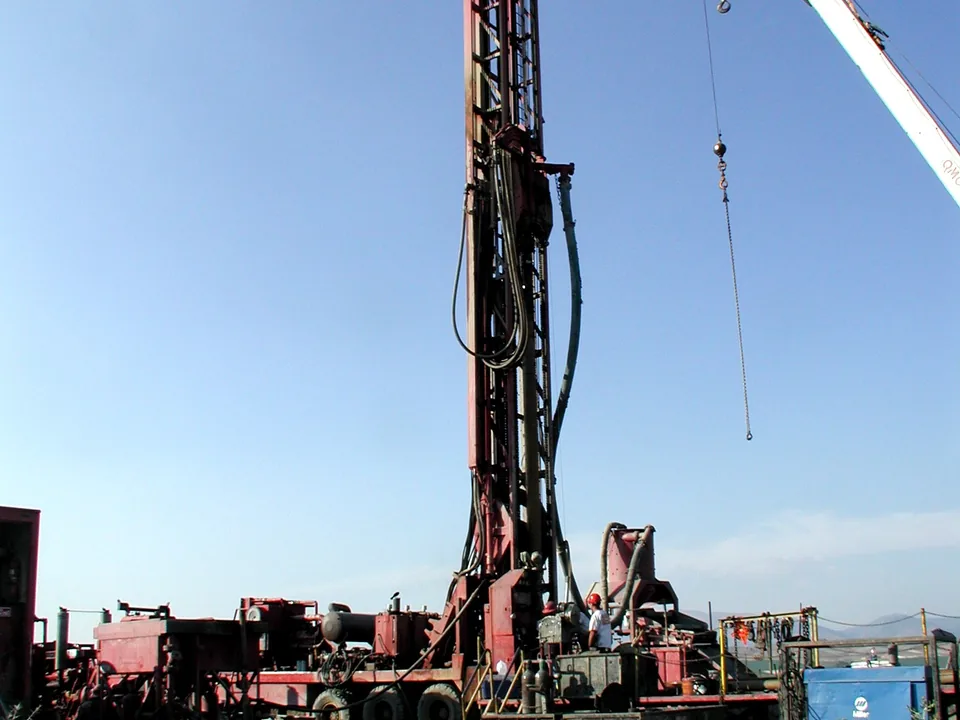
Repair, deepen, hydrofracture, re-drill, or replace?
Those are not interchangeable labels. The right path depends on the condition and construction of the existing well, geology, available yield, siting, separation distances, permit requirements and the professional's diagnosis. Ask each bidder to state what evidence supports the proposed path and what happens if the work does not restore adequate yield.
Rockingham County Rules & Replacement Options
Rockingham County routes private-well permits through the local Health Department
Rockingham County currently directs well and septic permit applicants to the Harrisonburg-Rockingham Health Department, 110 North Mason Street, Harrisonburg, VA, (540) 574-5200. Harrisonburg is an independent city, so this guide is aimed at Rockingham County and nearby rural/exurban private-well properties rather than assuming every Harrisonburg address uses a private well.
Construction, alteration, depth increase, or abandonment
Virginia's current 12VAC5-630-220 requires a written construction permit before a private well is constructed, altered, abandoned or increased in depth. Current rules distinguish this from a pump or equivalent cap/seal replacement, which is not defined as an alteration by itself.
Emergency replacement procedure
For a qualifying failed drinking-water well, 12VAC5-630-250 gives the replacement application priority. A licensed onsite soil evaluator, professional engineer or licensed water well systems provider conducts the required sanitary survey, and the Health Department applies the siting and separation-distance rules to the replacement location.
Siting and the old well belong in the same plan
A replacement bore still has to fit the property. Septic components, property lines and other potential contamination sources can constrain location. The bid should also explain what happens to the failed well. Current Virginia rules require abandonment/decommissioning to be handled properly rather than leaving an undocumented unused opening.
Completion records matter
Current 12VAC5-630-310 requires the owner, agent or water-well systems provider to furnish a signed Uniform Water Well Completion Report within 30 days after covered well work. Ask who files it, what copy you receive and how any old-well abandonment is documented.
Cost
Compare complete-system scope, not just a drilling price per foot
There is no defensible single Rockingham County replacement-well price. Depth and geology matter, but so do casing, grout, pump equipment, controls, pressure tank, trenching, electrical work, water testing, old-well abandonment, access and restoration. Current planning sources can establish order of magnitude; local itemized bids determine the real project price.
Current replacement-well budget references
Use these as planning references—not Rockingham quotes, averages or guarantees.
A current Virginia planning guide based on recent estimates places many complete private-well systems in this range, with site and depth variation.
HomeGuide's current national planning data places many complete 200-foot residential systems in this range and notes higher costs for deeper or more difficult projects.
The replacement-well refund rule can return a paid application fee after the required completion and permanent abandonment/decommissioning documentation is received.
The $5,000–$15,000 and $6,000–$16,000+ figures are planning references, not local bids. They are included to help homeowners recognize the difference between a complete replacement-well project and a pump-only service price.
Major cost drivers
| Cost driver | Why it matters |
|---|---|
| Depth and geology | More footage, slow drilling, difficult rock and unsuccessful/low-yield attempts can materially change labor and equipment time. |
| Casing and grout | Casing diameter, length, material and sanitary sealing are part of the construction scope, not optional finishing details. |
| Pump and pressure system | A drilling-only bid may exclude the pump, drop pipe, controls, pressure tank and final house connection. |
| Trenching/electrical | Distance from the well to the house and service equipment can create separate excavation and electrical work. |
| Old-well abandonment | Proper permanent abandonment/decommissioning adds work and documentation but may be tied to the replacement-fee refund. |
| Access/restoration | Rig access, trees, fencing, steep ground and repair of disturbed driveways or yards can change the total. |
A cheaper bid may simply exclude more
Imagine Bid A is $11,500 and includes drilling to an agreed assumption, casing/grout, pump system, permit coordination, testing and old-well abandonment. Bid B is $8,900 but excludes pump equipment, electrical connection, testing and abandonment. Those are not competing prices for the same project. Normalize the scope before deciding which bid is actually lower.
Find & Compare Contractors
Look for true drilling capability, not just pump-service SEO
A company that repairs pumps is not automatically a replacement-well driller. For this high-value scope, verify current Virginia licensing through DPOR, exact residential drilling capability, Rockingham County service territory, permit/sanitary-survey responsibility, drilling equipment, old-well abandonment capability and written low-yield/dry-hole terms.
Other providers to compare
These are neutral research starting points, not rankings or endorsements. Public provider evidence is deliberately separated from HPG's private future-tenant analysis.
Valley Well & Water Solutions Inc.
Why compare: Current first-party site explicitly serves Rockingham County and advertises water-well drilling plus well-location and permit setup services.
Contact: (540) 901-2066 · 206 5th Street, Broadway, VA 22815
Visit provider website →Burner Well Drilling Inc.
Why compare: McGaheysville-based water-well driller with current public business evidence for well drilling plus pump installation/service. Confirm current Rockingham residential availability directly.
Contact: (540) 289-9421 · 604 Island Ford Road, McGaheysville, VA 22840
No current first-party website was relied on for this listing; verify current DPOR record, insurance, exact service scope and availability before hiring.
Questions that make estimates comparable
- What evidence shows the existing well source/yield has failed rather than the pump, controls, pressure tank or plumbing?
- Is the proposed job repair, deepening, re-drilling or a new replacement well?
- Who obtains the Health Department permit and who performs any required sanitary survey?
- What drilling, casing and grout are included, and what is billed per foot?
- What is the written policy if the bore is dry or yield is inadequate?
- Are the pump, controls, pressure tank, trenching, wiring and house connection included?
- Who handles water sampling, inspections and the Uniform Water Well Completion Report?
- How will the failed well be abandoned or decommissioned, and who documents that work?
- What site access, grading and restoration are excluded?
- What workmanship and equipment warranties are in writing?
Frequently Asked Questions
Does no water mean I need a new well?
No. Pump, electrical, pressure-system, plumbing and low-yield/source problems can present similarly. Have a qualified well professional diagnose the system before treating replacement as the answer.
Who handles well permits in Rockingham County?
Rockingham County currently directs well and septic permit applicants to the Harrisonburg-Rockingham Health Department, 110 North Mason Street in Harrisonburg, at (540) 574-5200.
Does Virginia have an emergency replacement-well process?
Yes. Current Virginia regulation prioritizes qualifying emergency replacement applications for failed drinking-water wells and requires a sanitary survey by an appropriately licensed professional before the local Health Department issues the replacement permit.
What is the current permit fee?
Virginia's current schedule lists $300 for a private-well construction or abandonment permit. For a replacement well, a paid application fee is refundable after the required completion report shows that the replaced well was properly and permanently abandoned or decommissioned, subject to the regulation.
Can a contractor just deepen my existing well?
Deepening can be a possible professional recommendation, but Virginia treats increasing well depth as permit-regulated work. Ask what diagnosis supports deepening, what permit applies, and what happens if the deeper well still does not produce adequate water.
What records should I receive when the job is finished?
Ask about the inspection statement, sampling results, Uniform Water Well Completion Report, old-well abandonment documentation, equipment information and warranty. Current Virginia regulation requires the completion report within 30 days of covered well work.
How much should I budget?
Use current planning ranges only as a screening tool. A complete replacement can move substantially with depth, geology, casing, pump equipment, access, electrical/trenching, testing and abandonment. Obtain multiple itemized local quotes.
How do I verify a Virginia well driller?
Use Virginia DPOR's license lookup and confirm the business name, current status/classification and individual responsible parties as applicable. Also verify insurance, service area, permit responsibility and the exact written scope.
Helpful primary and planning sources
- Virginia Department of Health — Responding to Emergencies Affecting Your Private Well
- Virginia Administrative Code 12VAC5-630-220 — permits and inspection statement
- Virginia Administrative Code 12VAC5-630-250 — emergency replacement procedures
- Virginia Administrative Code 12VAC5-630-310 — completion report
- Virginia Administrative Code 12VAC5-620-70 — fee schedule
- Virginia Administrative Code 12VAC5-620-80 — replacement-well fee refund rule
- Rockingham County — well/septic permit contact
- Virginia DPOR — license lookup
- HomeGuide — current well-drilling cost planning data
Regulations, provider details and cost data were rechecked August 20, 2026. Confirm property-specific requirements and current provider credentials before contracting.