Featured Local Provider
Sunshine Septic Service
Maryville and Blount County, Tennessee
Current first-party service information advertises septic repairs, complete replacements, new-system installation, inspections and pumping. Verify current Tennessee permit coverage, insurance, exact project scope and availability before hiring.
Understand the Problem
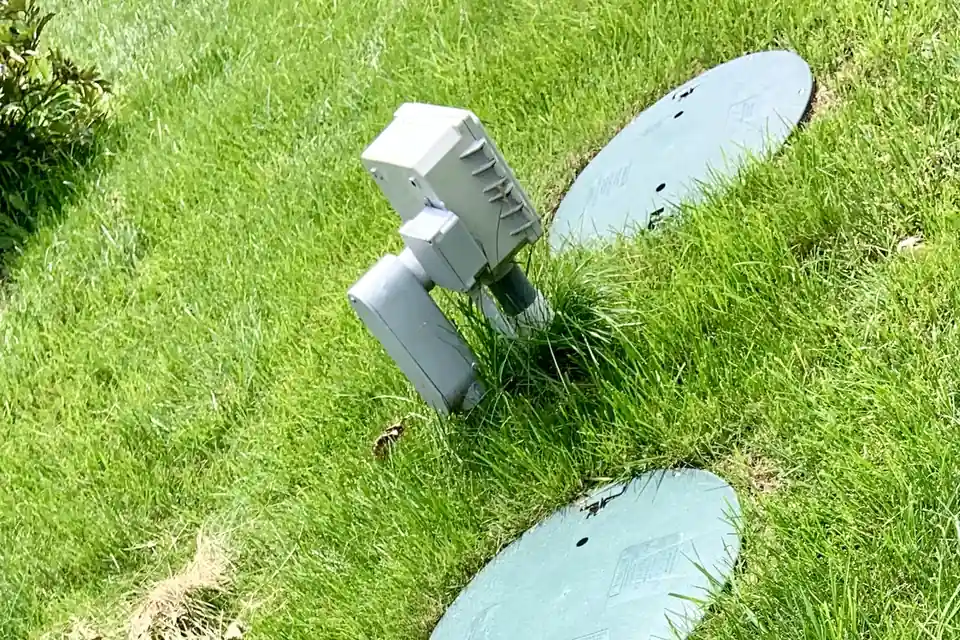
First confirm the property actually uses an onsite system
A Maryville, Alcoa, Friendsville or other Blount County mailing address does not prove that a property uses septic. Public sewer serves some properties while onsite systems remain in other areas. Before treating a backup or drainage problem as field failure, confirm wastewater service and locate any available septic permit, layout or final record.
Warning signs worth documenting without diagnosing the cause
What else can cause similar symptoms?
An onsite evaluation may need to distinguish an overdue pump-out, an indoor plumbing blockage, tank/baffle/piping problem, pump or distribution issue, field-line damage, disposal-area failure, or a conventional/alternative-system component problem. Do not approve a full field replacement merely from one symptom.
Blount County Rules & Repair Options
How Blount County's septic repair request works
Blount County's current Definitions of Services describes a Repair Request as the request to repair an existing septic system. The County says an Environmentalist visits the property, determines the problem and draws the septic repair layout. Its forms page currently publishes a dedicated Septic Repair Application.
| Current County step | What it means for the homeowner |
|---|---|
| 1. Repair request/application | Start with the current Blount County Environmental Health repair pathway rather than relying only on a contractor estimate. |
| 2. Environmentalist site visit | The County's current service definition says an Environmentalist visits the property and determines the problem. |
| 3. Repair layout | The County says the Environmentalist draws the septic repair layout after determining the problem. |
| 4. Properly permitted work | Match the proposed conventional or alternative-system work to a provider with current Tennessee permit coverage for that scope. |
| 5. Final inspection / Final Layout | Blount County describes Final Layouts as the final inspection for septic systems including repairs and modifications. |
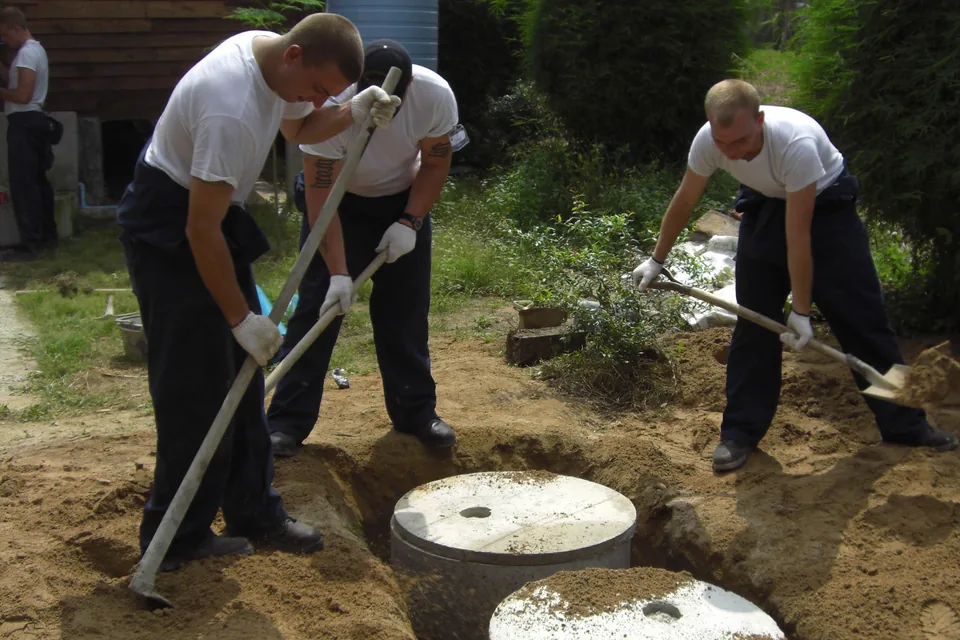
Blount County and TDEC have different roles
Tennessee's current septic application guidance identifies Blount as a county that handles its own septic service requests. TDEC separately regulates septic-system installer and pumper permits. A conventional installer permit covers specified installation, alteration, extension and repair work on conventional systems; alternative-system installer coverage is separate by system type, and pumper permitting is separate again.
Installer and pumper permits are renewed on an annual cycle, so verify the current permit—not an old badge, screenshot or marketing statement—for the person or company responsible for the work.
Repair, field-line work, modification or full replacement?
| Project path | When it may enter the discussion |
|---|---|
| Component or line repair | A specific pipe, tank component, pump, control or distribution problem is the main failure and the approved repair addresses it. |
| Field-line or disposal-area repair | A defined field problem can be corrected under the County repair layout and site conditions. |
| System modification | The existing system needs a broader approved change without complete replacement. |
| Alternative-system work | Site constraints or an existing alternative system require the appropriate system-specific installer capability. |
| Full replacement | Field condition, tank/distribution condition, site limits or the approved solution make broader replacement appropriate. |
Cost
Blount County's repair-request process matters to cost because the County Environmentalist determines the problem and draws the repair layout. The figures below are planning bands for different scopes; they do not replace the County evaluation, installer permit requirements or an onsite estimate.
| Planning scope | Current planning range | How to use it |
|---|---|---|
| Distribution-box replacement context | $500–$1,500 | 2026 component benchmark; not a field or full-system replacement price. |
| General septic-tank / component repair context | about $627–$3,040 | 2026 repair benchmark for smaller repair categories; the failed part controls the work. |
| Drain-field repair / rejuvenation | $1,000–$5,000 | 2026 planning band when the County-approved solution is repair rather than replacement. |
| Drain-field replacement | $3,000–$15,000 | 2026 field-replacement planning band before property-specific access, excavation and restoration. |
| Tank + field / broader full-system planning | $4,500–$20,000 | Broader 2026 planning range; conventional versus alternative system type can materially change the result. |
| Engineered / constrained system context | $7,000–$20,000+, sometimes around $25,000 | 2026 planning context for advanced or difficult sites, not an automatic Blount County price. |
Worked field-line arithmetic
Current 2026 planning evidence places field-line replacement around $20–$45 per linear foot. If the County repair layout actually called for 100 linear feet of replacement line, that arithmetic is about $2,000–$4,500; 150 linear feet is about $3,000–$6,750. Those examples exclude other components, County-approved layout changes, excavation complications, alternative-system equipment and restoration.
| Illustrative approved field-line scope | 2026 unit context | Arithmetic only |
|---|---|---|
| 100 linear feet | $20–$45 per linear foot | $2,000–$4,500 |
| 150 linear feet | $20–$45 per linear foot | $3,000–$6,750 |
What can move a Blount County quote
| Cost driver | Why it matters |
|---|---|
| County repair determination/layout | The Environmentalist's problem determination and repair layout shape what work is actually authorized. |
| Failed component and existing system type | A tank component or field-line repair differs from disposal-area replacement or alternative-system work. |
| Available disposal area | Site limitations and usable replacement area can change whether a conventional repair remains feasible. |
| Installer permit category | Conventional and alternative-system installer scopes are different, and the responsible permit holder must match the work. |
| Access, excavation and restoration | Slopes, utilities, trees, hauling, backfill, grading and final restoration can materially change the quote. |
| Final inspection | County final inspection / Final Layout coordination should be explicit in the written scope. |
Planning evidence reviewed August 17, 2026. Current 2026 HomeGuide and Angi data provide the repair, field and full-system bands. Maryville cost aggregators were reviewed only as low-weight local reasonableness checks and are not used as full-system replacement estimates. These are independent planning figures, not Sunshine Septic Service prices. No calculator is shown because a simple quantity input cannot determine the County-approved repair design or system type.
Find & Compare Contractors
Match the provider to the work—not just the word “septic”
| Provider capability | What to verify |
|---|---|
| Pumper | Routine pumping and permitted pumper scope; do not assume pumping credentials cover a field replacement. |
| Conventional SSDS installer | Current Tennessee permit coverage for conventional installation/repair work proposed. |
| Alternative-system installer | Current permit coverage for the specific alternative technology involved. |
| Septic + excavation provider | Exact field/system capability, excavation/restoration scope and current installer permit responsibility. |
| Plumber offering septic work | Whether the company itself holds the needed SSDS permit or coordinates with the appropriately permitted installer. |
Local provider comparison options
Use these neutral comparison providers as starting points. Confirm current service territory, exact septic repair/replacement capability, current onsite-system installer or pumper credentials where applicable, insurance, availability, permit responsibility and written scope directly.
Complete Septic & Excavation
Its current first-party site advertises septic-system and field-line repair, drain-field work, installations and excavation, with Blount County in its service area.
A1 Septic Installers
Maryville-based installer advertising conventional and advanced/alternative system installation, site planning and excavation across Blount County. Verify current TDEC permit coverage for the exact system type.
Foothills Excavating LLC
Maryville site-development contractor whose current service information includes septic tanks, septic field lines/tightlines and excavation. Its public septic positioning is more installation/sitework oriented, so confirm exact failed-system repair scope.
Platinum Plumber
Maryville plumbing company whose current first-party septic page advertises installation, replacement and troubleshooting of septic tanks and field lines. Verify who holds the current SSDS installer permit for the proposed system work.
Questions to put on every major septic estimate
- What problem did the County or onsite evaluator identify?
- Were routine pumping and indoor plumbing causes ruled out?
- Is there an existing County layout or septic record?
- Has the Blount County Repair Request/site visit occurred?
- What current Tennessee installer permit covers the proposed work?
- What exact tank, component, field-line, disposal-area or alternative-system work is included?
- Who coordinates the County final inspection / Final Layout?
- Are excavation, hauling, backfill, grading and restoration included?
- What changes if the existing or reserve disposal area is inadequate?
- What warranty applies to labor, components and installed system work?
Frequently Asked Questions
What does major septic repair or replacement cost in Blount County?
Current 2026 planning evidence separates component repair from drain-field and full-system work. General septic-tank or component repair may be roughly $627–$3,040, distribution-box replacement about $500–$1,500, drain-field repair or rejuvenation about $1,000–$5,000, drain-field replacement about $3,000–$15,000, and broader tank-plus-field planning about $4,500–$20,000. Blount County’s repair layout and approved scope control the actual project.
How do I request a septic repair in Blount County?
Start with Blount County Environmental Health's current Septic Repair Application and instructions. The County currently describes a Repair Request as leading to an Environmentalist site visit, problem determination and repair layout.
Does every Maryville-area home use septic?
No. Confirm onsite versus sewer service and available records for the specific property.
Can field lines be repaired instead of replacing everything?
Sometimes. The failed component, County layout, site constraints, available disposal area and system type determine which paths are feasible and approvable.
What is the difference between a pumper and an installer?
Tennessee permits these activities separately. Also verify whether conventional or specific alternative-system installer coverage is needed for the job.
What happens after repair work?
Blount County currently describes Final Layouts as the final inspection of septic systems including repairs and modifications. Ask who schedules that inspection and what closes the County record.