Featured Local Provider
TCB Masonry
Rockford / Northern Illinois
A Rockford masonry company with current first-party chimney repair, rebuild, restoration and new-masonry capability. For a structural chimney problem, ask for a written scope that separates demolition limits, retained masonry, rebuild height, brick and mortar matching, flashing, crown/cap, flue or liner coordination, scaffolding, permits and cleanup.
Understand the Problem
Structural warning signs are different from routine maintenance
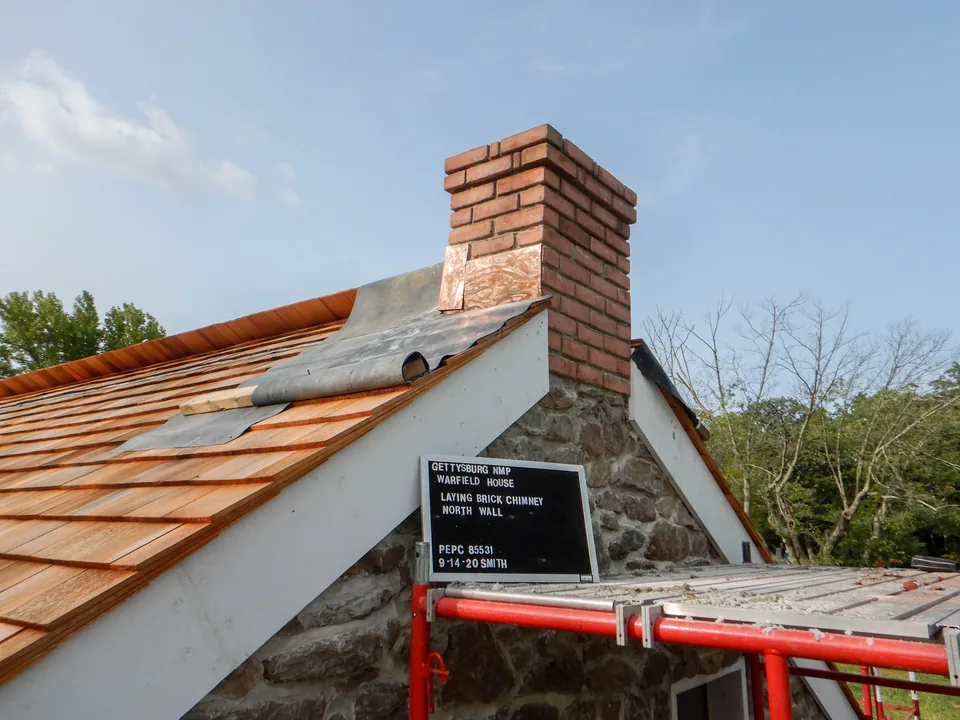
Repair, partial rebuild, roofline-up rebuild, or full reconstruction?
Those labels only become useful when the written scope defines them. A repair may retain almost all existing masonry. A partial rebuild removes a deteriorated upper section. A roofline-up rebuild reconstructs the exposed stack while retaining masonry below the roof. A full-height reconstruction can extend through the attic or farther down when the lower chimney is also unsound. Ask the contractor to mark the proposed demolition line and explain why the retained section is suitable to stay.
Rockford Rules & Rebuild Options
Confirm the permit path before structural demolition begins
The City of Rockford states that permits are required for construction, alteration, replacement, repair, removal and demolition of buildings, structures and attached appurtenances, subject to adopted exemptions. Its Building Department also notes that construction documents prepared by a licensed design professional may be required depending on the project. For a substantial chimney rebuild, confirm the exact building, mechanical, roofing and inspection requirements for the address and scope before work begins.
When professional documents may matter
Rockford does not say that every detached-house chimney rebuild requires an architect or engineer. The City does say design-professional construction documents may be required. If the stack is leaning, separated, damaged below the roofline, tied to a footing/foundation problem, or part of a more complex structural alteration, ask the Building Department and estimator whether structural design is needed.
Do not assume a generic Illinois masonry license
Rockford's current Building Permit page says general contractors are not required to be licensed. Roofing contractors are an example of a trade that does require Illinois state licensing. Verify insurance and any credential required for each part of the actual scope rather than relying on a generic “licensed contractor” label.
Historic landmarks and local historic districts add a separate exterior-review question
Rockford's Historic Preservation Commission regulates changes to locally designated landmarks and properties in local historic districts. Current 2026 instructions say that an exterior change visible from a public right-of-way generally needs a Certificate of Appropriateness; ordinary maintenance that does not change material or appearance is treated differently. The certificate does not replace the ordinary building permit.
Useful scope distinctions
| Scope | Questions to put in writing |
|---|---|
| Localized masonry repair | Which bricks/joints are replaced, how mortar is matched, and why the remaining stack is structurally suitable. |
| Partial upper rebuild | Exact demolition course, transition to retained masonry, crown/cap, flashing and scaffolding. |
| Roofline-up rebuild | Whether all exposed stack masonry is replaced, how the roof intersection is flashed, and how flue/liner conditions are handled. |
| Full-height reconstruction | Demolition below roofline, attic/interior protection, support/footing conditions, flue/fireplace coordination, structural documents and restoration. |
| Historic-property rebuild | Certificate of Appropriateness, brick/mortar/design matching, retained original material, photographs/drawings and permit sequencing. |
Cost
Use national rebuild ranges as planning cross-checks—not Rockford quotes
Chimney rebuild pricing changes with demolition height, brick/mortar matching, roof pitch and access, scaffolding, flashing, crown/cap, liner or flue work, structural design, historic review, interior protection and how much of the lower stack remains. The best local evidence is a set of written Rockford scopes that price the same work.
Current national rebuild ranges
Use these to sanity-check scope—not as a local average.
HomeGuide's current national guide places many roofline-up masonry stack rebuilds in this range and full replacements around $4,000–$15,000.
Angi's current rebuild guide places complete chimney rebuilds in this broad national range, with partial work lower and difficult projects capable of costing more.
These are national planning references, not Rockford bids, invoices, permit-declared values or a promise that a local project will cost the same.
Rockford's current permit-fee mechanics
The City's 2026 schedule lists a residential alteration/remodel/addition building-permit fee of 0.55% of total reported project value, with a $14 minimum. A $50 permit-processing fee applies, and the schedule also contains a 10% technology surcharge for most Construction and Development Services fees plus plan-review and trade-permit charges where applicable. Rockford defines reported value broadly to include labor, materials, contractor overhead/profit and demolition work. Ask the City to calculate the actual chimney-project total rather than estimating fees from one line item.
What changes the rebuild bid?
| Cost driver | Why it changes the scope |
|---|---|
| Rebuild height | A few upper courses, the full exposed stack, or demolition below the roofline represent very different labor and material quantities. |
| Roof and scaffold access | Steep roofs, height, limited staging and protection requirements can materially increase labor and equipment. |
| Brick and mortar matching | Older or decorative masonry may require harder-to-source units, custom matching or preservation-sensitive mortar. |
| Flashing and roof integration | Rebuilding at the roofline often changes flashing scope and may require a qualified roofing trade. |
| Flue / liner / appliance work | A masonry rebuild does not automatically include venting-system changes; proposals should state what is inspected, retained or replaced. |
| Structural conditions | Movement below the roofline, footing/support concerns or damage to adjacent framing can introduce design and reconstruction work. |
| Historic review | Documentation, material matching and Certificate of Appropriateness timing can affect design and schedule. |
| Interior protection | Full-height work can require attic or living-space protection and restoration not present in an exterior-only stack rebuild. |
A better way to compare two prices
A $6,000 proposal that rebuilds from the roofline up, replaces flashing and crown work, matches brick/mortar and includes permit coordination is not directly comparable to a $4,500 proposal that only removes several damaged upper courses and excludes flashing, permits and disposal. Normalize the written scope first; compare totals second.
Find & Compare Contractors
Match the provider to the structural scope—not just “chimney service”
Rockford search results contain chimney sweeps, fireplace retailers, general masonry firms, restoration contractors and broad lead-generation pages. For major structural work, prioritize evidence that the provider actually rebuilds masonry chimneys or comparable structural masonry and can explain permit, flashing, flue and historic-property coordination.
Other providers to compare
These are neutral research starting points based on current public service information. They are not ranked or endorsed.
CT's Masonry & Caulking Repair Inc.
Current Rockford-area first-party material covers masonry chimney repair, restoration and homeowner decisions involving repairs versus rebuilding.
Visit websiteJT Masonry & Restoration
Rockford-based masonry company publishing chimney repair as an exterior service and current project/customer evidence of brick-chimney restoration.
Visit websiteReyes Masonry
Current first-party Rockford pages focus on chimney and masonry repair and explicitly discuss the decision between tuckpointing and complete chimney rebuilding.
Visit websiteQuestions that expose scope differences
- Where exactly will demolition stop, and what evidence shows the masonry below that line is sound?
- Is the quote for repair, upper partial rebuild, roofline-up rebuild, or reconstruction below the roofline?
- Who handles building permits and any required construction documents?
- Is the property a local landmark or in a local historic district, and who coordinates the Certificate of Appropriateness if needed?
- How will brick dimensions, color, texture, mortar color/composition and joint profile be matched?
- Are flashing, crown/cap, liner/flue inspection and appliance venting included or excluded?
- What scaffolding, roof protection, interior/attic protection, demolition hauling and cleanup are included?
- What happens if demolition reveals unsound masonry below the assumed rebuild line?
- What written warranty applies to masonry and related flashing or water-management work?
Frequently Asked Questions
Does a leaning chimney always require full replacement?
No. Visible lean is a reason for onsite evaluation, not a remote replacement diagnosis. The correct scope depends on the location/cause of movement and the condition of masonry, support, roof connection and flue system.
Can I just repoint a badly spalled chimney?
Repointing addresses failed mortar joints; it does not restore brick that has lost substantial material or solve structural movement. Ask the mason to distinguish sound units that can remain from masonry that requires replacement.
Does Rockford require a building permit?
The City states that permits cover construction, alteration, replacement and repair of structures, subject to exemptions. Confirm the exact permit and inspection path for the chimney scope with Rockford Construction and Development Services before work starts.
What if my house is in a Rockford historic district?
Visible exterior changes to a locally designated landmark or property in a local historic district generally require a Certificate of Appropriateness before the ordinary permit. Rockford's chimney guidelines emphasize matching original design and masonry detail when rebuilding.
How much should I budget?
Current national 2026 guides place many roofline-up rebuilds around $1,000–$3,500 and complete rebuild/replacement projects around roughly $3,100–$15,500, with difficult projects higher. Treat those only as planning cross-checks; local written bids determine the real Rockford cost.
Should the liner be replaced during a masonry rebuild?
Not automatically. The masonry stack and flue/liner are related systems but different scopes. Ask what is inspected, retained, repaired or replaced and whether any mechanical or appliance-venting permit/credential applies.
Can a general mason do the work?
A qualified masonry contractor may be appropriate, but major chimney reconstruction also requires familiarity with roof access, flashing, fireplace/flue interfaces, applicable permits and historic details when relevant. Compare actual rebuild experience, not the business category alone.
Are the listed companies endorsed?
No. HPG's featured provider is an unpaid editorial selection, and comparison companies are neutral research starting points. Verify current project fit, insurance, required trade credentials, written scope and availability yourself.
Primary and helpful sources
- City of Rockford — Permits
- City of Rockford — Building Permits & Inspections
- City of Rockford — 2026 Fee Schedule
- Rockford Historic Preservation Commission
- Rockford — 2026 Certificate of Appropriateness forms & instructions
- Rockford Historic Preservation Design Guidelines
- National Weather Service — Rockford 1991–2020 climate normals
- Angi — 2026 chimney rebuild planning guide
- HomeGuide — 2026 chimney rebuild cost guide