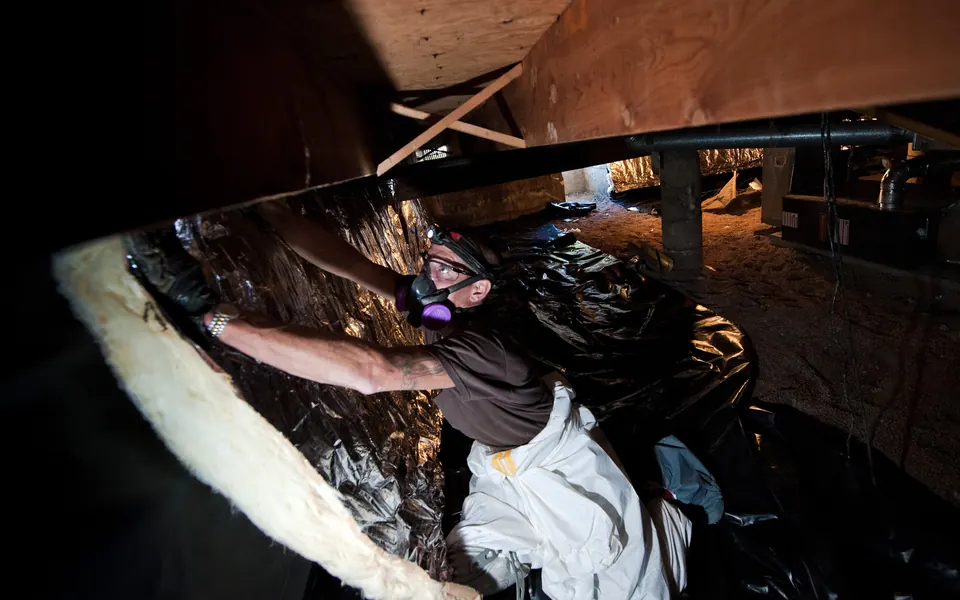
A damp crawl space can show up under the house or inside the living area. The symptom alone does not identify whether the moisture is coming from the ground, rainwater, humid air, condensation, plumbing, or another source.
Look for the moisture path before choosing the product
A ground cover can reduce soil moisture entering the crawl space, but it does not replace exterior drainage, plumbing repair, sump work, air sealing, structural repair, or humidity control when those are needed. A useful inspection separates the active moisture paths and then matches the work to them.
Find the local version of this guide
Local pages add county or market-specific conditions, public-process context, and independent provider options.
Buncombe County / Asheville
Asheville and Buncombe crawl-space moisture, encapsulation questions, local conditions, and independent providers.
Haywood County / Waynesville
Waynesville, Maggie Valley, Canton and Haywood crawl-space moisture and encapsulation guidance.
Henderson County / Hendersonville
Hendersonville, Flat Rock, Fletcher and Henderson County crawl-space moisture and provider research.
Want to learn more?
These practical and official resources can help you understand the issue and prepare better questions before hiring.
DOE: crawl-space capillary break and ground cover
See why ground vapor control and bulk-water drainage are treated together.
Official resource ↗DOE: crawl-space vapor-retarder job aid
Review federal installation guidance for crawl-space vapor retarders.
Official resource ↗EPA: ways to control moisture in a home
Review practical steps for ground moisture, ventilation and humidity control.
Official resource ↗