Septic problem resource center
Understand septic problems before choosing the next step
Learn the difference between routine maintenance, a temporary symptom, a drain-field malfunction, and a project that may require major repair or replacement.
Educational guides
Warning signs, repair decisions and local-rule research
Drain-field failure signs
Observable warning signs, what they can indicate, and why a professional site evaluation matters.
Decision guideRepair versus replacement
How cause, soil, damage, space, permits, and system design shape the available options.
HPG research · 2026Repair rules by county
Compare repair starting points, published fee signals and installer/design roles across seven HPG septic markets.
Local homeowner guides
Market-specific septic repair guidance
Each guide focuses on major drain-field repair or septic replacement for one area, including local process, provider options, and questions to ask before choosing a project path.
Blount County, Tennessee
Major septic repair and replacement guidance for Maryville-Alcoa area onsite-system properties, including the County repair-request process, Tennessee installer roles and provider options.
Local guideMadison County, Alabama
Major septic repair and replacement guidance for Huntsville-area onsite-system properties, including county permits, Alabama installer roles and provider options.
Local guideSpartanburg County, South Carolina
Major septic repair and replacement guidance for Spartanburg County onsite-system properties, including SCDES process, planning costs and local provider options.
Local guideBenton County, Arkansas
Major septic repair and replacement guidance for onsite-system properties in Benton County, including Arkansas ADH design and permit roles, planning costs and local provider options.
Local guideHickory and Catawba County
A focused guide for major drain-field repair and septic-system replacement in Catawba County.
Local guideHaywood County
Drain field repair, septic system replacement, permits, mountain alternatives, public assistance, and independent providers for Waynesville, Maggie Valley, Canton, Clyde, and Haywood County.
Local guideBuncombe County
Drain field repair, septic system replacement, permits, mountain alternatives, public assistance, and independent providers for Asheville, Black Mountain, Weaverville, Candler, and Buncombe County.
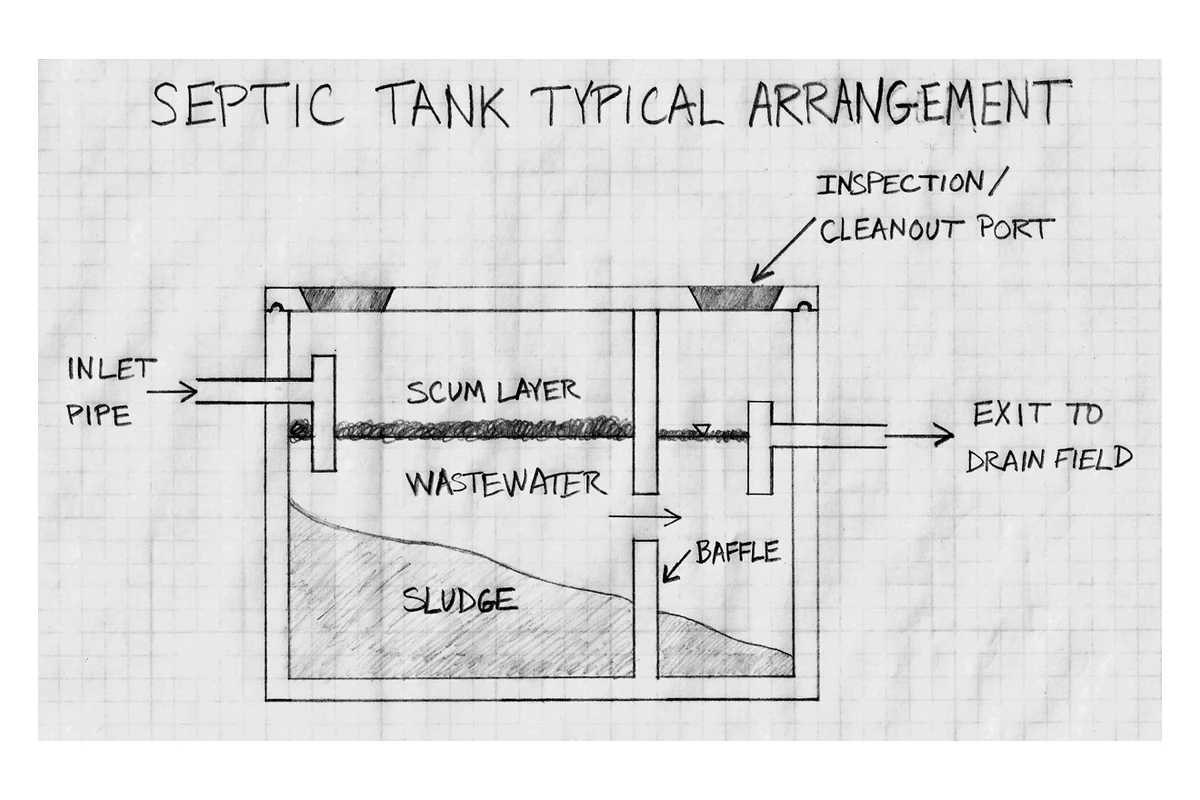
How a septic tank and drain field work together
Wastewater leaves the home, solids settle in the tank, and clarified effluent moves to a soil absorption area (the drain field). When the field can no longer accept wastewater, backups, wet ground, or odors may appear—and major repair or replacement may be discussed after a professional evaluation.
Free local planning tools
Local septic cost estimators
These free 2026 tools use the same privacy-preserving septic estimator engine with market-specific pricing evidence. No email or phone number is required.
Hickory / Catawba County, NC
Explore a 2026 planning range for septic repair, drain-field work, tank replacement, broader system replacement, or septic-line work.
Cost estimatorAsheville / Buncombe County, NC
Explore a 2026 Western North Carolina septic repair or replacement planning range using the Buncombe market pack.
Cost estimatorWaynesville / Haywood County, NC
Explore a 2026 Haywood County septic planning range without rebuilding or changing the validated Haywood estimator.
Cost estimatorHuntsville / Madison County, AL
Explore a 2026 Alabama septic repair or replacement planning range calibrated to current Madison-area evidence.
Cost estimatorMaryville / Alcoa / Blount County, TN
Explore a 2026 Tennessee septic repair or replacement planning range calibrated to the current Blount County repair process and Maryville-area evidence.
Cost estimatorSpartanburg / Spartanburg County, SC
Explore a 2026 South Carolina septic repair or replacement planning range calibrated to current SCDES process and Spartanburg-area evidence.
Cost estimatorBentonville / Rogers / Benton County, AR
Explore a 2026 Northwest Arkansas septic repair or replacement planning range for onsite-system properties using current Arkansas ADH process and Benton County evidence.