Start with diagnosis and records
A responsible evaluation may consider tank condition, baffles or filters, distribution devices, piping, field saturation, household water use, system age, permit records, available repair area, soil suitability, and whether a different system type is required.
| Possible path | When it may be discussed | What to verify |
|---|---|---|
| Component repair | A damaged pipe, distribution box, pump, alarm, baffle, or other identifiable component is causing the problem. | Whether the field itself still accepts and treats wastewater. |
| Partial field work | A defined section is damaged and the approved design or local authority permits a limited correction. | Permit requirements, field condition, and remaining approved capacity. |
| New drain field | The existing field no longer functions reliably or cannot be repaired under local rules. | Suitable area, soil evaluation, design, access, and protection of the replacement area. |
| Alternative system | Conventional options do not fit the site or current requirements. | Design, operating requirements, maintenance, power use, inspections, and long-term cost. |
Why pumping is not the same as drain-field repair
Pumping removes accumulated material from the tank and is essential maintenance. It may temporarily reduce backup symptoms, but it does not automatically restore soil absorption or correct a failed field. Recurring symptoms shortly after pumping deserve further evaluation.
Factors that push a project toward replacement
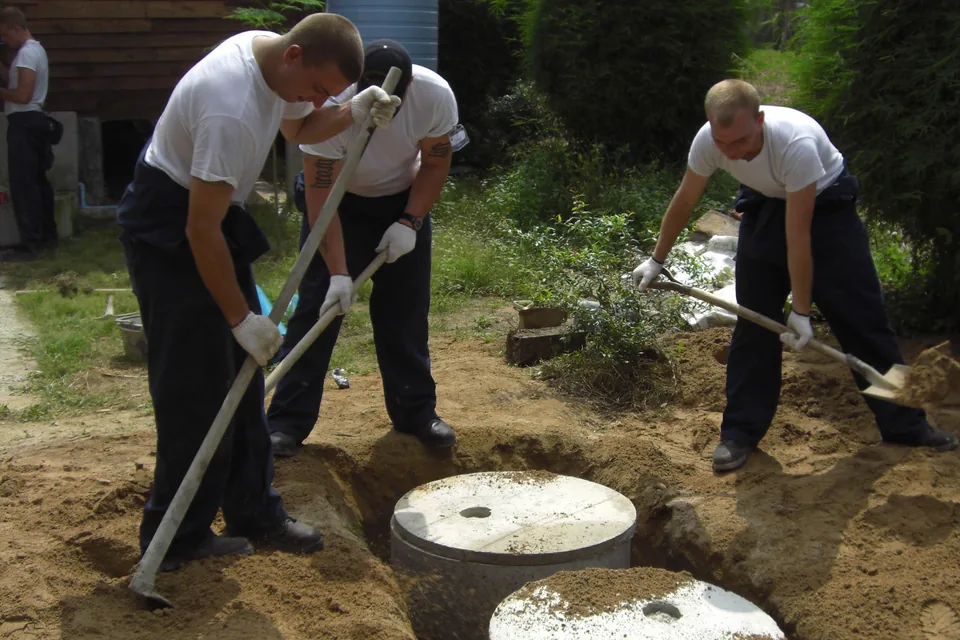
- Persistent surfacing wastewater or backups after other causes are ruled out
- A field that is physically damaged, compacted, or no longer accepts effluent
- No compliant way to correct the existing layout
- Major changes in home use that exceed the approved system design
- County findings or permit requirements that call for a new approved system
On mountain propertiessteep slopes, shallow soils over bedrock, high rainfall, or limited disposal areaalternative designs such as low-pressure pipe, drip, or mound systems are often discussed after soil evaluation. Local process details appear in the Haywood County guide, the Hickory / Catawba County guide, and the Buncombe County / Asheville guide.
Cost and scope
The EPA notes that conventional septic-system repair or replacement can cost thousands of dollars and cites a broad $5,000–$15,000 range for malfunctioning conventional systems, with alternative systems potentially costing more. Local price depends heavily on access, soil, permits, excavation, design, system type, and restoration work.
Questions to ask before approving work
- What evidence identifies the cause of the malfunction?
- Is the proposed work permitted and approved by the local health department?
- What part of the system is being repaired or replaced?
- What alternatives were considered and why were they rejected?
- What site restoration is included?
- What maintenance or operating requirements will the new system have?
Want to learn more?
These official and practical resources can help you check current local requirements, understand site conditions, and prepare better questions before you hire.
For Hickory and Catawba County projects, the free 2026 septic cost estimator can compare a regional planning range using the project details you already know.